Dear 1st Year Students–but by this how could I mean anything less than everyone–for what are any of us but inquirers into what the heck is going on?

This is a sticker I made up that I’ve handed out in class for a few years.
I’ve run out of them before the need for the message has removed itself.

hard work is a waste of time if your idea sucks

A student wanted to argue the grade I’d given him/her.
Me: What grade do you think you deserve?
Him/Her: I deserve an A.
Me: Why do you deserve an A?
Him/Her: Because I tried hard. I really worked in this class.
Me: I believe you.
But your work was never in the top half on any of the 15 weeks we had class.
Him/Her: But what you said really got to me.
Me: It didn’t get into your work, though, did it?

The talk didn’t end there, but you get the point.

Hard work makes a difference in digging ditches, not in creating advertising.
Not by itself.

The writer of an ad is after magic.
He can’t be after anything else.
Magic is the warm, ripe peach.
An ad without magic is the pit inside.

An ad must call its audience to it at the same time that it delivers its message.
Magic.

Hard work applied to any creative attempt in which magic is missing is like rubbing your boy/girl-friend’s arm over and over and over in the same place with the same motion.
It’s a nuisance, not a turn on.

The Best Thing about Richmond, VA

Dear Students,
It’s midnight in your world.
Tomorrow, Saturday Nov. 4th, is the Brunswick Stew Festival in Richmond, VA.
Right now Peter Coughter’s stomach is preparing itself for greatness.

Do not doubt the brain is told of the stomach’s plans.
Do not doubt the gastric juices are being held in abeyance, waiting for release.
Here is my advice:
Eat breakfast.
Eat breakfast early.
As soon as you are awake go to the kitchen & drink coffee, drink water & eat 2 eggs, scrambled.
Move your bowels.
Only then are you prepared for professional Brunswick Stew eating.
If you do not stretch your stomach with breakfast, forget it, you won’t have energy to eat.
If you don’t move your bowels early and fully in the morning a professional’s portion of BS will cause you, uh, grief, in the middle of the day.
Rosie’s Pub’s bathrooms, while adequate, are wildly over populated during BS fest.
Plus, you do not want to lose valuable time when the lines have not yet caught on to what the best stew is.
Take your wife…or reasonable facsimile.
Having beautiful women with you keeps you from being attacked by the mob when you get in line to buy 8 quarts of the winning stew EACH.
Do not kid yourself.
You are not going to make BS at home.
YOU MUST BUY A YEAR’S SUPPLY of BS tomorrow.
Freeze it.
It does not change.

Last year I brought home 18 quarts.
I was eating BS at home into the new year.
I bought 22 quarts.
I took pity on people who got none.
Plus I served it at school one day.
DO NOT HAVE PITY ON FOOLS WHO DO NOT BUY ENOUGH BS.
They are like people who ignore signs saying Do Not Skate on Thin Ice.
They deserve their fate.

Be strong.
Be mean if necessary.
(all the while remembering that mercy is of God)
I urge you to prepare.
I urge you to fight.
I believe you are strong & you will win.
Godspeed you.

P.S. Please remember to stock your freezers knowing
I intend to be in Richmond in little more than a month.
With a plastic spoon and unfathomable emptiness.

I’ve Been so Busy I’ve Become Useless

Dear Students,
This is Henry David Thoreau.
The guy who wrote Walden.
The book about living in a cabin in the woods.

Thoreau kept a lifelong journal that is filled with, well, read it–there are several different collections–the journals are about 2 million words long (so I’ve been told; I’ve not read even close to all of it)–and also pieces of it online.
http://www.walden.org/Library/The_Writings_of_Henry_David_Thoreau:_The_Digital_Collection/Journal


Read some.
I know you read Walden in high school, but that doesn’t count.
It’s impossible in your teens to understand what Thoreau was putting at stake by going out to live by himself in the woods as an adult.
In your teens your instructors, even in college, would have taught Walden as man escaping from the real world.

Man trying to get away.
Man trying to find himself.
I used to wonder about that.
What is so far inside you that you have to go way out to nowhere to find?

I see the opposite.
I think Thoreau’s story–from both Walden & the Journals– is man escaping from busy-ness to what is real in life.
Escape from busy-ness not to nothingness but to engagement.

Thoreau engaged with what surrounded him.
Read the Journals and you see a man intimate with plants, trees, agriculture, making a living out of where he was, the well-being of his friends, and his own thoughts.
Engaged with what was there, not with all that wasn’t.
A man happy with and filled by his apprehension of what came each day into his path of walking and paths of thinking.

There was a busyness in his world that oppressed him.
I think Walden was not retreat from that busyness but the removal of busyness because it hinders engagement.

This…

…is one bitch of a master.
The continually shortening timelines we are conducting the ad business by leave less and less time for thinking.
Specifically and most destructively, for the kind of thinking the creators of joy need in order to flourish.

Busy-ness keeps me from engaging with what surrounds me.
It keeps me from the lazy playfulness that surprising insight comes from.
Producing to too tight a schedule results in snap insights.
Snap insights, while they can be true and have value, are more snapthan thought, and tend to be the same insights other people get when they don’t think about an idea for long.

When I am busy I am not able to sit idly with a thought others deem ridiculous, turning it over and over until something in it strikes me and I can follow that thought out until it turns into something funny/true and etc.
There may be none of the originating impulse left in the thought by the time it turns into a piece of work.
Nevertheless, the significance of the starting point–and this includes my attitude toward it and the lazy time that inspires it–cannot be overestimated, it seems to me.
Judging by the work I’ve done, at least.
And that of people I’ve seen with like minds.

But this should not surprise.
The value of the kind of engagement with the world Thoreau spent time at and which filled his thinking and writing is not obvious to the world.
Which is to say THE MONEY can’t see value in it.
And whatever THE MONEY can’t see doesn’t exist.

What am I suggesting you do?
1) There is a laziness in the thought process that is important.

Do not be bashful about indulging in it. Do not let the nimcompoops bully you out of it. Don’t be a bully to others. It’s part of the process.
2) Look for the chance to engage with the world instead of engaging with the busyness of the job. The joy you seek to inspire in others does not & will not rise up out of the clammy-handed nothingness of a Blackberry.
Technology contains no salvation.
I have no gripe with timeliness and in no way do I suggest there is not significant & life-giving power in deadlines.
But without engagement with the world about you and the people about you, the word dead in deadlines becomes more powerful.
3) Read. Thoreau, Emerson, U.S. Grant’s Memoirs.
Good writers read.

Being Good at School isn’t the Point of School

Dear Students,
School is a place to try on the real world.
A place to fall face-first without the consequences of failure or the stifling restrictions of the real world.
Don’t mistake it as a stage to perform on.

It’s a practice room.

The real world is going to be yours too soon with its nincompoop forests of unbearable dullards, wasteful rigamarole, and ignoramus creative directors who belittle your work because they’re afraid they’re not as gifted as you.

Don’t hold yourself back from using all the room your current freedom provides.

Wait for and work at finding the wild insight that you only barely think may be true instead of settling for the mild one you know everyone else will have.
Not only is the wild one more likely to be fun to work on, but one of the lessons being out of school soon teaches is that the boldness of thought which you’re so free to try on at school is a necessity for success in the real world.
You will not rise without it.

Old Dog Tricks

Dear 2nd year Students,

Might help you, might turn you around, at least give you some exercise.

Show the product.
First said to a class in 1990. 
Still true. 
Ad school students continue to have trouble with this. 
Over and over I see great effort put into the making of ads that use 99% of the space for talking about something besides the product, and then, as a courtesy to the client, the logo is placed in 12 point type in the bottom right corner. 
No. 
The client’s product is the reason you’ve got the space in the paper or on TV to work with. 
Deal with the product. 
You may end up choosing not to show it. 
But start with the thought that you will. 
Do at least a couple ideas in which the product is the visual.
1) It will focus your thinking.
2) By starting there you’ll have a reason for why you don’t show the product if you find that makes better work.
3) If you find a solution you like that doesn’t show the product, I guarantee it will use one of the lines you wrote when the product was the visual.
And, 4), perhaps best when you’re a student, you’ll generally end up with two campaigns for each assignment you work on. One with, one without.
This isn’t a luxury. 
Half the time, when I look back in my workbooks at stuff I’ve done before, I like what I didn’t show better than what I showed. 
This ain’t science.
You aren’t going to be right as often as you think.
And tastes change.
I’m not suggesting showing the product works for everyone, but it works good in school.

If you can’t say it short you’re probably lying.
“Will you marry me?”
or,
“I don’t know if this is a good idea or not, and I’ve got reservations about asking this, but if you’ll promise to always be what I hope you’ll be and things go well do you think you might …” 
Why does the first line move us, and the second one make us jump up to change the channel quick? 
Look at that first line.
Every word in it pulls a ton of weight.
There’s no word in that line that doesn’t have to be there to say what it says.
It aims at the bulls-eye.
The second line is all equivocation.
It’s no less true than the first line but it’s so full of the speaker talking about himself and not about the point that we can’t stand to listen.
1st line means what it says.
2nd line says what it means.

Put your client’s whole proposition on the line.
Put the product’s place in the world at stake.
Find what the product’s hold on people is & dare the audience not to get it.

(I’m not saying long lines aren’t true. This is a trick. Something to consider when what you’re doing isn’t going right & you don’t know why) 

Portfolio. You are what you show.
Are you unusual? 
Don’t hide it.
Lead with it.
Get found. 
Most of the great creatives I’ve met are more odd than typical. 
Damaged, not whole.
Introspective rather than gladhanders.
Faulty, deep, extraordinary, giving, shy people.
(How else could they know what other people think, which is what you have to do to write good ads)

Portfolios come in here at W&K by the hundreds. 
Every one of them has the same stuff in it. 
A long copy ad. A visual solution. A packaged-goods print ad. etc. 
Stop it. 
Don’t add to the boringness of the world. 
Think. 
What is a portfolio for? 
If you suppose it’s to function as a collection of your work you’re missing the point of why you’re making one. 
If you had a job, sure, collecting your work would be a valuable habit. 
But, it’s not what portfolios are for when you’re graduating ad school & hoping to get a job. 
A portfolio is your pitch for a job. 
What can you show that will convince me as a creative director I should put you in a room and feel good about what you’re going to come out of it with?

Imagine there are two writers.
One has a collection of ads done for various products.
The other has 4 small black books on every page of which there is a single headline.
Let’s say the work is of equal quality.
Which do you want to put in the room?
For me, I would wonder how much of the portfolio guy’s ads his art director did, and whether the pieces that are well-written are the writer’s usual output or a few kernels culled from a ton of manure. Then I would look at the ton of headlines in the small books and with a better feel for that writer’s ability hire him.
You’re not trying to convince me your old ads are good. You’re trying to convince me your next ads will be.
It’s not a trick meant for everyone, but maybe for you.

How about an art director with the usual book full of beautifully laid-out magazine ads versus an art director with no print ads but a reel of wacked-out spec tv spots & short films?
Again let’s say the work is of equal quality.
If the work I need to hire for involves doing a lot of print, more than likely the portfolio of print will win the day.
But that’s not a failure for the guy with the TV reel.
It’s a victory.
If what you’re into is TV, you probably won’t find happiness at an agency that majors in print.

You’re looking for a job.
The great agencies are looking for disciples.
Reveal yourself.
That’s what portfolios are for.

Don’t judge. Everything in life is good and bad.
It’s easy to dump on John Denver.
A piece of cake to make distinctions between ideas and between people and between products based on political correctness.
But a mass audience finds no edification in you flogging them for not seeing the world you wish for. 
There’s nothing wrong with John Denver and his music.
You don’t like it, fine.
I do.
Make your client and your client’s product distinctive on its merits.
Don’t define it by standing it in opposition to something else.
Don’t say “Our product contains no John Denver.”
It’s a trap.
It’s an easy hole to fall into.
I’ve done it.
A client pointed it out to me.
I’d disparaged John Denver’s music in order to make clear the type of music we were talking about was more “cool” than that.
What a heel I was.
I liked John Denver and there I was disparaging something I liked in order to make a point.
Don’t.
It’s so easy to do you feel almost invited to kick the kickable dog in order to claim a higher place for what you’re talking up.
Let how easy something is be a warning to you.

What’s the news?
What do you have to say that isn’t known? 
Most advertising is boring, not because it isn’t clever, but because it says nothing people feel they don’t already know. 
News isn’t limited to information. A new way of looking at something is news. A re-appreciation of an undervalued thought or person or idea or product is news.
People are so hungry for news they’ll take it from unclever work.
People are so hungry for news they’ll take what’s not true as news if somebody can get an extra crank in on the fooled-you-machine.
Ask it.
What’s the news?
There’s good advertising in it.

Maybe you suck

Dear New Students,

You’ve heard by now that the secret to being great in advertising is to take risks.
You’ll hear it again.
Everybody says it.
What does it mean to you?

Many students feel that taking risks means to do work that’s bizarre, profane, sexual. That by doing work like this they risk criticism and lack of acceptance.

But how much risk is that?
First, what kind of work is likely to get you more acceptance among your peers than weird kinky stuff? Work pointedly aimed at tickling the fuzzy little antennae of your fellow students is not risky.

Second, and most to the point here is:
To take a risk with your work you’ve got to put something you have at risk.

You don’t have anything.
You got no reputation to ruin.
You got no job to lose.
There’s only one possession you have that you could put at risk as a student interested in advertising:

The dream that you’re good at it.

That’s your sole possession.
You want to be great at making advertising?
Put the dream at risk.

If you do anything in this new school year, I urge you to do this:
Do your work.

Find out if you’re good at what you’re trying to do.
Find out what happens when you do the work you believe is right instead of putting effort into making your work look like what you think everyone else is doing.

There is pressure to do ads that look like what other peoples’ ads look like.
I understand that pressure.
It doesn’t stop at graduation, it increases.
But let’s talk about now.

You’re trying to practice an art form you have little background in.
You’re attempting to conquer a form that has few masters and perhaps even fewer rules that are useful as guides.
So in that void, your brain, in fear, looks about for something to hold on to.
That’s where the devil steps in.
“Here”, he says, “why don’t you relax, and do what everyone else does. Why fight for what you want? Are you the smart one?”

When you give in to that pressure, you stunt your growth.
When you do work that grows out of a desire to do what has been done you are not aiming at doing work that comes out of you.
You are the only person who can do your work.
“Yes”, you must tell the devil, “I am the one doing this. No one else can.”

This is so simply true it’s easy to dismiss.
Don’t.
All it requires is the smallest kernel of courage and, perhaps, a tiny understanding of how life works.

Here’s a way to start:
Read Self Reliance, an essay by Ralph Waldo Emerson.
I know, you read it in high school.
Doesn’t count.
Read it now, when you know enough for your life to be at stake.
Listen to this tiny excerpt in which Emerson says simply & with style what I am only able to point at:
There is a time in every man’s education when he arrives at the conviction that envy is ignorance; that imitation is suicide; that he must take himself for better, for worse, as his portion….

That’s the chance you must take.
There is the risk to be run.
To be yourself and to do the work you do.
The reward is you find out whether you can do this or not.
Maybe advertising is your calling.
You should find that out.
Imagine sitting at a desk knowing you’re good at what you’re doing.

Or, maybe you suck.
Equally important to discover.
Imagine sitting at a desk not knowing if you’re any good at what you’re being asked to do.

Put the dream at risk and school can help you find out if advertising—this misunderstood, over-hyped, unholy mix of business & art-form—is where you will find the most traction for your talents, or whether you should look elsewhere for the path best suited to you.

Ernest Hemingway tried his hand at advertising.
He sucked.

An advertising book that’s not about advertising

Dear Students:

Read a book this summer.
{Read a ton of books if you can–nothing makes you a better person for a company to hire as its voice than having something inside your head your mouth can draw from}

Read this book of short stories:

In Persuasion Nation by George Saunders
This book will scare you.
The world run by measurers.
(my word, not his)

Measurers are people who say the things inside a person can be counted.
Measurers are people who want to replace individual thought & gut feeling with numbers.

This author has imagined the world we’re headed for unless you guys stop it.

Don’t frame your diploma. (I mean no disrespect to your achievement when I say it ain’t worth duck shite)

Dear Graduates,

I wrote this when I taught at Art Center College of Design in Pasadena.
I gave it out last class of the year.
More of the wisdom/crap I shovel on students’ heads to make up for them not being able to point at anything concrete I ever taught them.

Just because some of you are getting jobs don’t even start thinking school’s out.
There are tougher folks out there than me.

It’s LOVE of money that’s the root of all evil. The money itself is fine.

Dear Students,

I address those of you from 2nd year, a week after graduation.
Those of you in 1st year are welcome to listen if you can stand it.

I wish to speak about the careers you’re itching to hurtle yourselves into.
I mean to take some of the piss out of your vinegar.

Although 99% of you won’t be able to learn a thing from the telling of my experience, it’s possible half a line may find lodging in a brain or two.
Greater than I have taken up poorer odds.

Forget about the

.
Yes, that’s the message. (most of you can tune out here)
Sure there’s

in advertising.
And I know that after committing a bundle of moolah to a VCU AdCenter education you’d like nothing more than a fat envelope of green to appear under your pillow tomorrow morning.

Forget about the

Pretend it doesn’t exist.
Go about starting your career as if there isn’t a paycheck every other week.
Make your new job choices without asking about salary.

Don’t worry.
That you have what it takes to get through AdCenter may not yet assure you it’s time to pack for the trip to NY to be inducted into the Art Directors’ Hall of Fame, but surely it cannot be difficult to believe you have come into possession of the mere competency required to pay back your loans.

Forget the

Always remember this: forget the

Go get a job in advertising because somewhere along the line the tango of words & images dancing together called you.
Get into this business because great advertising can lift up the weak and destroy evil.

It’s hard work making ads.
I don’t know what drives people who do it because there’s

in it.
I do it because nothing else feels as much like fun when you’ve done your work well.

Don’t go into advertising if you haven’t been called.
Don’t go into advertising if your goal is to have martinis at the Mondrian with Joe Pytka.
There isn’t enough power in wanting that to make it happen.
At least not in the way you’d want it to happen.

You know without me making much of it you’ll make enough

for the things you need.
But, not as much if you chase it as there is when you chase ideas.

Forget the

.
Pay no attention to it.
Go after what your inside wants–the work.
Love the making.
Screw the mammon.
You can’t eat it.
However.
You can live on work. You’ll see.

“Screw Fenske. He’s an idealist.”
I can hear you think it.
You’re right.
I’m out of bounds idealistic here.
You have to be.
Don’t do this if you aren’t.

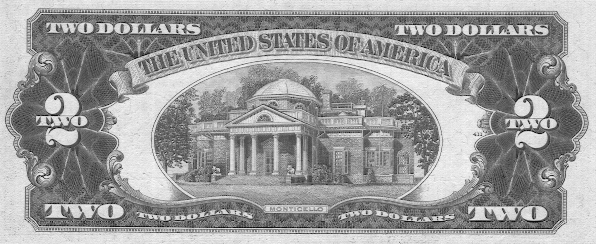
p.s. i’ve read the only money in Lincoln’s pocket when he was assassinated was a worthless $5 confederate bill (issued in Richmond) like the one above

“The road of excess leads to the palace of wisdom.” – William Blake

Dear Students,

Both my experience as myself and my observation of others as themselves has taught me Blake’s line is true.

Excess of headlines, excess of thought, excess of sleep, bbq, lecturing, hope, anger, shuffleboard, excuses, work …. excess of anything leads the normal human’s mind to distaste.

Distaste leads to embarassment at finding oneself engaged in an act for which one has acquired distaste.

Embarassment leads to change. And change in a hurry. In the direction opposite from distaste.

——eg; overdrinking. you wake up in the morning after a night of excess and bang, distaste. you hate what you’ve done, and then, bang again, embarrassment sets in, and you vow in that minute to never drink again.————

Knowledge is good. But it is merely a first step.
Wisdom is when we take knowledge and apply it to life.
What Blake points to here, in my sense of it, is that what moves the human being to the wise act is the embarrassment at having walked the road of excess.

I bring this up why?
As students what you are at school for is change.
I know you think it’s to learn something but that’s wrong.
Or, not exactly right.
If you were there to become a brain surgeon, then, yes, you’d be there to learn.
The causes of brain injury. The steps involved in reparative surgery, etc.
But you’re there to advance in your abilities as practitioners of an art form.
Or, at least, a form of communication that happens inside and for which there exists no definitive number of steps from beginning to end that when followed turns you out as “a copywriter”.

You are there to change from someone who can’t into someone who can.
Sometimes from someone who can a little into someone who has added understanding.
Sometimes from someone who always could but didn’t into someone who feels confident enough to once in a while do.
Sometimes all that happens is a student discovers themself to be (or not be) what they always thought they were.
It’s change you’re after.

You have a week of school left.
Probably half of your book is done.
You’ve got almost enough done to skate through portfolio review, but not more.
You feel the need for the other half of your book to be better than the half you’ve got.
At the same time you feel you’re done with school.
What you have is a conundrum.
I know the feeling.
(warning: it never goes away)
Here’s what to do:
You’ve got nothing left to learn.
You’ve got plenty left you can change.

I have a suggestion.
Whatever you can think that’s too personal.
Whatever you can think that risks embarrassment.
Whatever you can think that points at a truth you feel that you’re afraid other people don’t feel but you suspect they maybe feel but don’t talk about.
Do it.
Let the embarrassment roll over you.
It is the one sure motivator I know of.